
Office and customer zone
Finish, reception, showroom, collaboration, and customer-facing space.
Flex and office warehouse properties must balance office finish with loading, power, parking, permitted use, and the cost of adapting the space for the next occupant.
LEYDARS advises flex-property owners and investors and represents landlords, occupiers, buyers, and sellers across the DC market area.
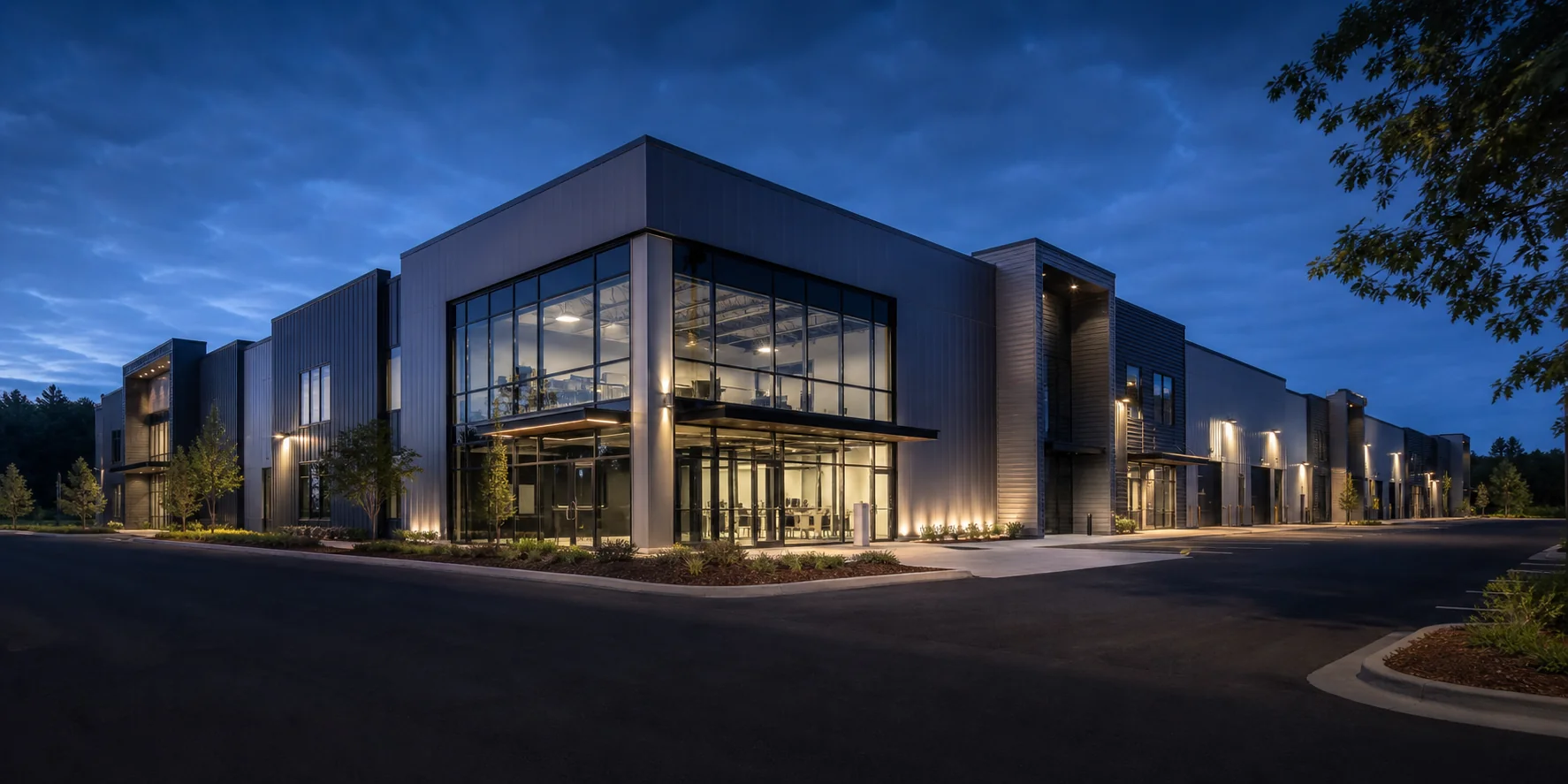
Flex adaptability test
A credible property screen covers office finish, warehouse depth, loading, power, parking, customer access, zoning, and the cost of reconfiguring the premises.
Finish, reception, showroom, collaboration, and customer-facing space.
Light assembly, research, staging, storage, and employee support.
Drive-in or dock access, delivery flow, power, and service circulation.
Owner-user, leasing, and investment requirements
Flex real estate must work for both the operating business and the property’s income plan.
Coordinate suite configuration, capital work, tenant mix, renewals, and pricing around local small-bay demand.
Compare loading, office content, power, parking, signage, zoning, and full occupancy cost before selecting space.
Test tenant granularity, rollover, suite condition, replacement cost, and the depth of the owner-user and investor markets.
Flex property underwriting
Flex value depends on a workable balance of office finish, warehouse utility, site capacity, and leasing flexibility.
Office-warehouse ratio, bay depth, loading, clear height, power, and suite divisibility.
Parking, circulation, signage, outdoor areas, customer access, and delivery movement.
Permitted uses, business licensing, assembly or showroom needs, and compatibility with neighboring tenants.
Lease term, tenant improvements, credit, renewal probability, downtime, and releasing cost.
Configuration and user demand
Flex properties sit between office and industrial use, where the right office-warehouse ratio, loading, power, parking, and zoning can support a wide range of operating businesses.
LEYDARS evaluates flex space by the users it can serve today and the cost of adapting it tomorrow—then connects that functional range to leasing, acquisition, or disposition strategy.
Office finish, warehouse depth, ceiling height, loading, and demising flexibility determine practical use.
Service firms, contractors, light assembly, showroom, research, and owner-users often form the core demand pool.
Flexible bays, adequate power, parking, and permitted uses widen the audience and reduce reletting friction.
Market research, occupancy advice, and brokerage
Research identifies available bays, user demand, rents, and sales. Advisory tests value and occupancy alternatives. Brokerage executes leasing, acquisition, or disposition work.
Adaptability · Users · Cost
Track available bays, user demand, effective lease terms, sales comparables, and competing property configurations.
Compare space and ownership alternatives, test adaptation cost, and align the property decision with business needs.
Represent owners, occupiers, buyers, and sellers through marketing, negotiation, diligence, and occupancy.
Small-bay and office-warehouse submarkets
Flex performance varies with contractor networks, research clusters, defense activity, transportation access, and the availability of small-bay inventory.
Limited supply favors service, creative production, food, showroom, and light operational uses in close-in locations.
Research, healthcare, contracting, and local service businesses support varied office-warehouse requirements.
Defense, technology, construction, and business services create strong demand for adaptable small-bay and owner-user space.
Other property types
Flex strategy