
Network position
Highways, customers, labor, delivery routes, and service reach.
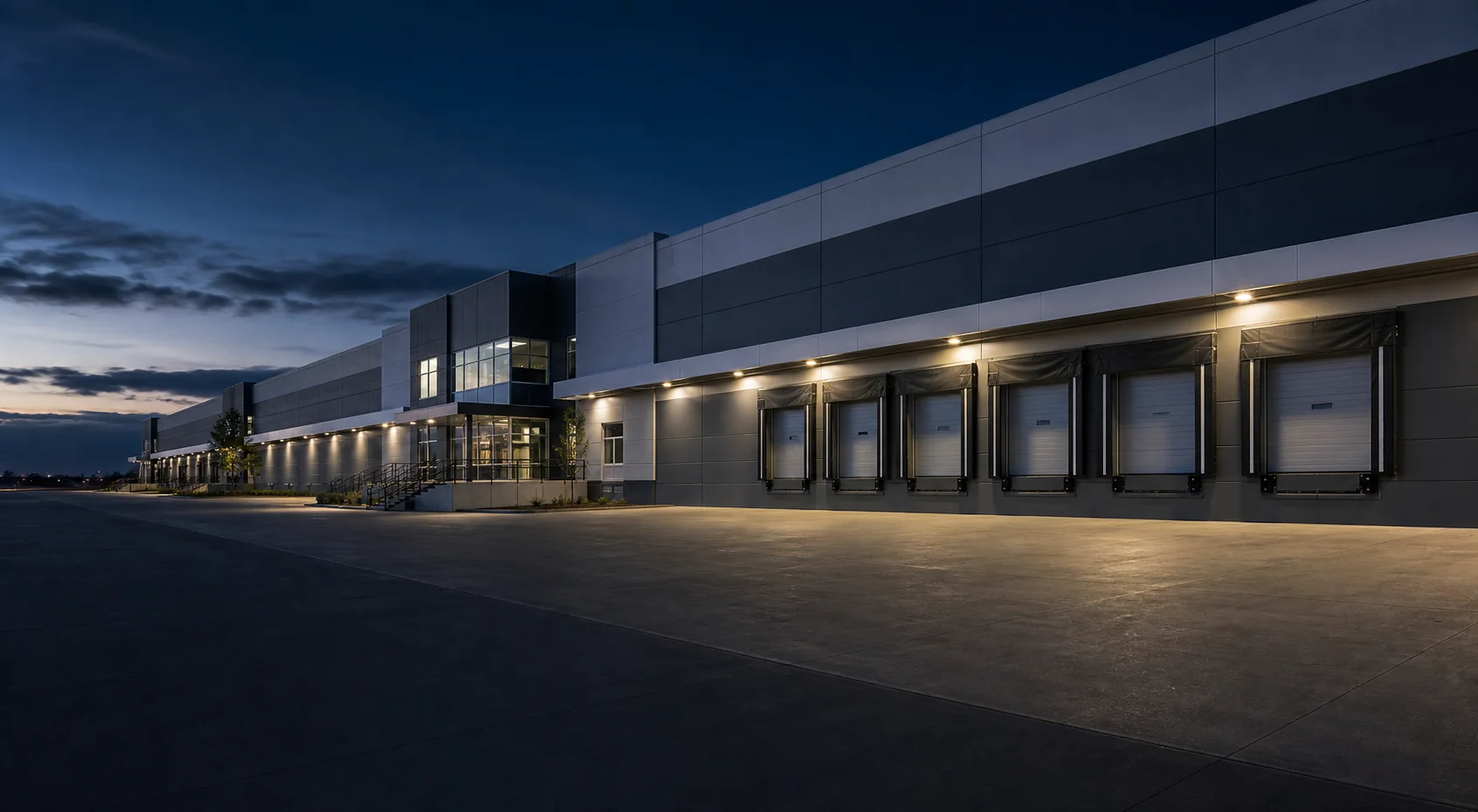
For industrial properties and requirements, access, loading, clear height, power, site capacity, labor, and customer reach directly affect utility and marketability.
LEYDARS advises industrial owners and investors and represents landlords, occupiers, buyers, and sellers across Washington, DC, Maryland, and Northern Virginia.
Industrial building utility
The property screen should test loading, clear height, power, truck circulation, parking, outdoor storage, zoning, labor access, and delivery routes against the actual operation.
Highways, customers, labor, delivery routes, and service reach.
Dock-high positions, drive-in access, truck courts, and circulation.
Clear height, column spacing, bay depth, and floor capacity.
Service capacity, distribution, backup needs, and expansion potential.
Parking, trailer areas, outdoor storage, security, and site coverage.
Industrial property review
Industrial performance is not explained by rent alone. Building utility, site logistics, tenant economics, and capital requirements work as one system.
Highways, delivery routes, labor shed, customer proximity, and first-mile or last-mile requirements.
Clear height, dock-high and drive-in loading, power, truck courts, parking, and outdoor storage.
Tenant credit, term, escalation, rollover, operating expense structure, and renewal probability.
Replacement cost, improvements, environmental diligence, financing, and exit assumptions.
Building and site utility
Industrial value depends on how location and physical specifications support distribution, manufacturing, service, or last-mile operations.
LEYDARS evaluates the property as operating infrastructure—connecting access, loading, power, clear height, site circulation, and labor reach to tenant demand and investment liquidity.
Highway connectivity, delivery routes, labor access, and proximity to customers determine operating relevance.
Clear height, loading, power, truck courts, parking, and site coverage define the building’s functional range.
Vacancy, construction, absorption, rent growth, and competing blocks establish the real transaction environment.
Infill and highway-oriented industrial markets
Industrial demand across the DC market area is shaped by population, infrastructure, government activity, service needs, and constrained infill supply.
Scarce infill inventory supports last-mile, service, food, construction, and municipal uses close to dense customer demand.
Interstate access, established industrial corridors, and institutional demand support distribution, manufacturing, and service facilities.
Technology, defense, data infrastructure, and population growth drive a broad spectrum of warehouse and operational requirements.
Operating and investment requirements
Industrial strategy changes with the owner’s income plan, the investor’s basis, and the occupier’s operation.
Align capital work, tenant retention, rent strategy, and disposition timing with the property’s competitive utility.
Test tenant demand, replacement cost, capital exposure, lease rollover, and exit liquidity within the relevant industrial segment.
Translate throughput, loading, power, labor, fleet movement, and occupancy cost into a disciplined location decision.
Research, site advisory, and brokerage
Research defines competing inventory, rents, sales, absorption, and new supply. Advisory addresses site, value, and ownership alternatives. Brokerage executes leasing, acquisition, or disposition instructions.
Access · Utility · Demand
Define the competitive inventory, compare effective terms, and measure supply, absorption, and user demand.
Evaluate location, lease-versus-own alternatives, capital needs, and the strategy for a property or portfolio.
Represent ownership, occupiers, buyers, or sellers through positioning, negotiation, diligence, and closing.
Other property types
Industrial strategy